 SILVAFALCON
DFR India / Permission-led operations
A first view. A better-informed response.
Drone as First Responder brings an early aerial view to an incident or operational event—before a ground team has a complete picture. SilvaFalcon scopes programmes around safe capture, accountable response and a usable record.
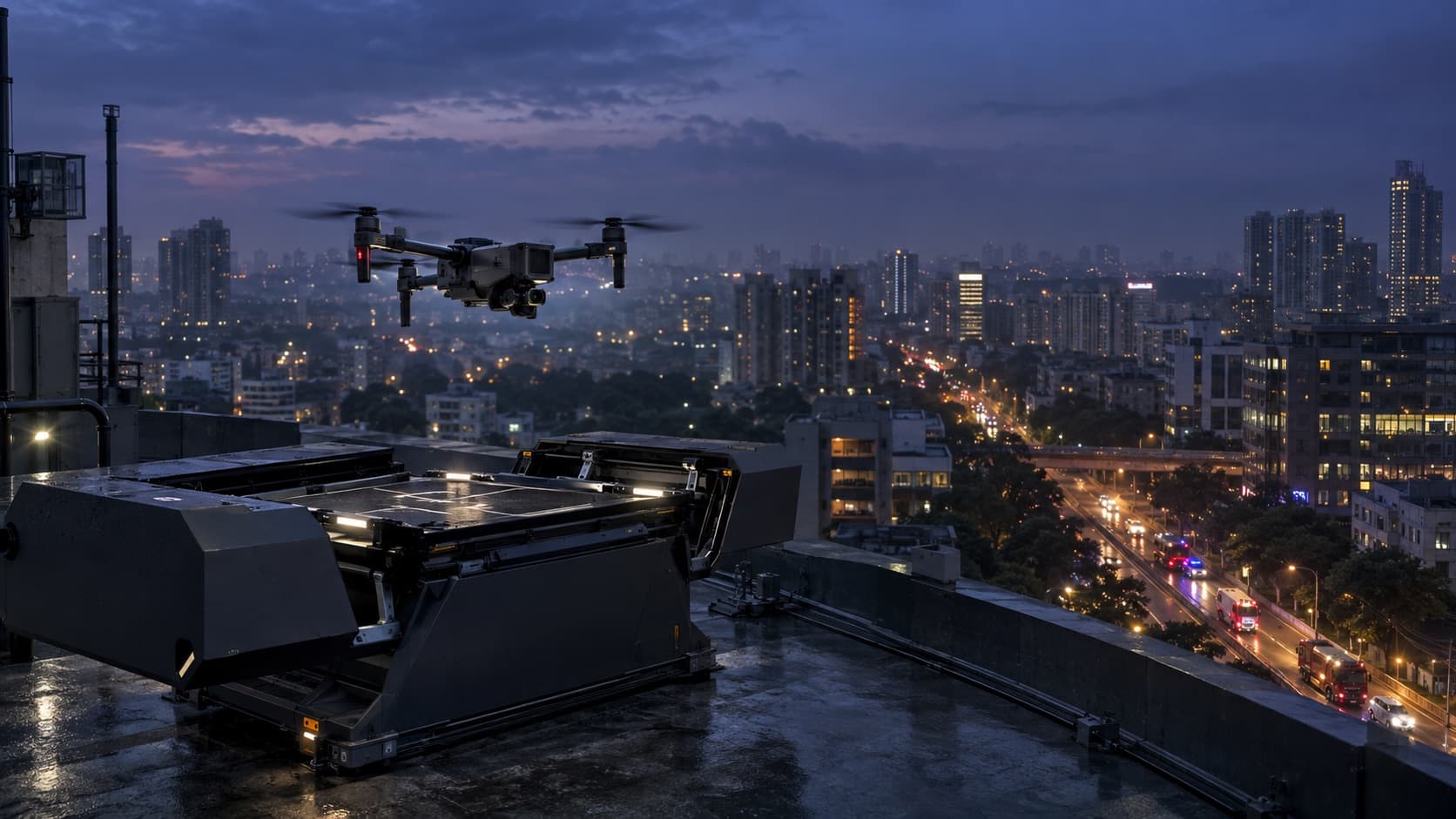
Programme illustration, not evidence of an operational deployment or customer engagement.
How a response mission works.
A reported event triggers assessment, not an automatic launch. The authorized team checks the operating envelope, weather, airspace, connectivity and mission priority before dispatch.
- 1. Receive and triage an event or scheduled inspection
- 2. Authorize the mission and confirm conditions
- 3. Launch an approved aircraft or dock workflow
- 4. Share location-linked imagery with the response team
- 5. Return, retain evidence and assign follow-up
What the response team can receive.
Define the required live view where supported, dated photographs, thermal context when suitable, location references and an event summary. Coordinate precision, latency and availability depend on the aircraft, network and validated configuration.
Falcon AI connects the mission to the record.
Use Falcon AI planning, processing and collaborative viewing alongside the response workflow. Scope aircraft control, live feeds, media transfer and incident-system connections individually. The programme handover should include a tested integration diagram and failure procedures.
Construction and mining.
Illustrative workflows include checking a reported perimeter incident, assessing a blocked access road, reviewing a slope or stockpile observation, and surveying conditions after severe weather. Do not launch into blasting, hazardous emissions or an uncontrolled incident scene.
Transmission and utility corridors.
An APTRANSCO-type transmission use case could focus on a reported line event, access conditions and location-linked inspection evidence. APTRANSCO is an illustrative agency context here—not a claimed client, partner or deployment.
Authorized public-safety and coastal observation.
A Telangana Police-type programme could support authorized incident assessment and search coordination. Coastal applications could include inspection of permitted infrastructure or assessment of reported hazards. These are proposed scenarios, not claims of work for Telangana Police or coastal agencies.
Permissions, privacy and success criteria.
Agree the lawful purpose, approvals, operating limitations, access to imagery, retention and audit trail before a pilot. A docking product does not itself authorize BVLOS, unrestricted surveillance or autonomous dispatch.
- Measure event-to-first-usable-view during a controlled pilot
- Track mission completion and reasons for aborted flights
- Test connectivity loss, weather holds and escalation
- Assess evidence completeness and follow-up time
Continue exploring
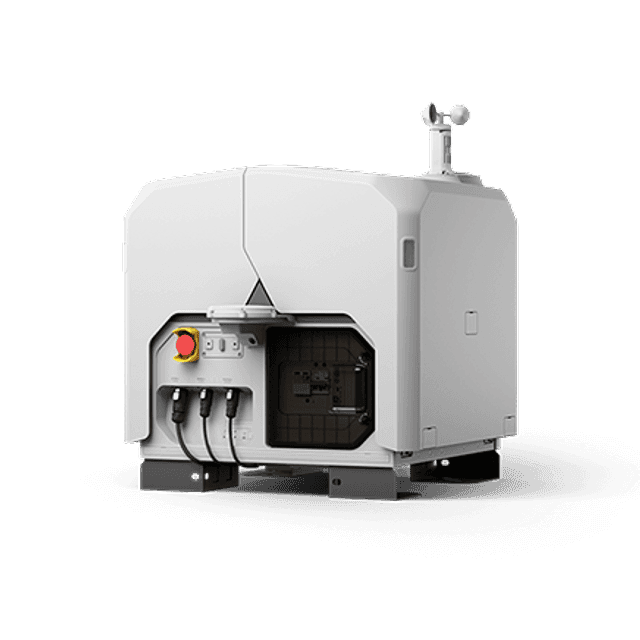
DJI Dock 3
Explore DJI Dock 3 deployment considerations, compatible aircraft and remote operations workflows. Request a site assessment and system quotation.
View model & request quote ↗
Plan. Process. See it together.
Explore live Falcon AI workflows for drone flight planning, processing, data requests and collaborative viewing for surveying, construction and inspections.
Explore the workflow ↗DFR India pilot programme playbook
Define a permission-led Drone as First Responder pilot with a clear purpose, tested response workflow and measured acceptance criteria.
Read the guide ↗Bring us the brief. Let’s define the outcome.
Contact SilvaFalcon in Hyderabad and Dubai. Request a Falcon AI demonstration, drone survey, inspection, DFR assessment or hardware quotation.
Explore the workflow ↗Let’s work with your real brief.
Bring a site, a dataset or a hardware requirement.